The Lane Kiffin Playbook: Inside Modern College Football Strategy
Modern college football has transformed from a slow, methodical game of attrition into a fast-moving ecosystem defined by rapid roster turnover, immediate eligibility rules, and high-octane offensive systems. At the center of this evolutionary shift stands Lane Kiffin, whose career reflects a masterclass in adaptation, tactical innovation, and program reinvention. Rather than relying solely on traditional, multi-year high school recruitment cycles, Kiffin has pioneered an operational model that treats college football programs like agile businesses—combining cutting-edge offensive schemes with aggressive use of the transfer portal and modern digital media engagement.
Understanding how the Kiffin model works requires looking beyond the box scores and examining the structural mechanics that drive his success. From spacing philosophies that stretch defensive secondaries to the psychological management of a locker room filled with veteran transfers, Kiffin’s approach offers a clear blueprint for how modern athletic programs can maximize efficiency and offensive output. This explainer breaks down the core components of the system, detailing the strategies, personnel management techniques, and tactical principles that define one of the most influential coaching styles in contemporary sports.
The Fast-Paced Spread Offense Blueprint
The foundation of any successful Kiffin-led team is a relentless, tempo-driven spread offense designed to dictate the pace of the game and overwhelm defensive communication. By aligning wide receivers near the sidelines, the offense forces opponents to defend the entire width of the field, creating horizontal and vertical stress. This spacing prevents defenses from stacking the box with extra linebackers or safeties, forcing coordinators into difficult choices regarding man-to-man coverage or zone soft spots. The use of tempo—hurrying to the line of scrimmage before the defense can substitute or communicate checks—prevents opposing coaching staffs from making complex defensive adjustments.
At the heart of this system is the extensive use of Run-Pass Options, commonly known as RPOs. In an RPO, the quarterback is given a post-snap read based on the movement of a specific defender, usually an unblocked linebacker or safety. If that defender steps up to stop the running back, the quarterback pulls the ball and throws a quick slant or screen behind them. If the defender drops back into coverage, the ball is handed off for a clean run. This mechanism neutralizes athletic pass rushers and physically dominant defensive linemen because the ball leaves the quarterback's hand before contact can be made, turning the defense’s own aggressiveness against them.
Operating this system requires precise timing, disciplined offensive linemen who can block downfield without drawing illegal man downfield penalties, and quarterbacks who can process information at an elite speed. The ultimate objective is not merely to gain yardage on a single play, but to wear down the physical and mental stamina of the opposing defense over four quarters. By maintaining a high play count, Kiffin offenses systematically expose structural weaknesses in opposing units, turning tight games into high-scoring victories through sheer volume of offensive opportunities and consistent structural advantages.
Maximizing the Transfer Portal as a Roster Engine
While traditional coaching philosophies have historically prioritized building rosters strictly through four-year high school development, Kiffin has embraced the transfer portal as a primary engine for immediate roster construction. This approach requires a fundamental shift in how talent is evaluated and acquired. Instead of projecting how an eighteen-year-old athlete might develop by their junior year, coaching staffs evaluate proven college production against top-tier competition. This drastically reduces the guesswork inherent in traditional recruiting, allowing programs to plug experienced players directly into starting roles.
Effectively managing the portal requires a highly organized scouting operation and clear communication regarding role expectations. Programs utilizing this model look for specific traits in incoming transfers:
- Demonstrated production at lower levels or underutilized talent at major programs looking for a primary role.
- High football intelligence capable of grasping a complex, up-tempo playbook within a condensed offseason window.
- Positional versatility that allows coaches to move players across different alignments based on weekly matchups.
- Strong competitive character required to integrate smoothly into an established locker room culture.
The strategic advantage of this model is velocity. While developing high school prospects can take two to three seasons before yielding significant on-field contributions, a well-executed portal class can completely turn a roster around in a single offseason. Kiffin’s success demonstrates that programs do not need to wait half a decade to become competitive; by identifying undervalued talent in the national transfer pool, they can achieve immediate parity with historical powerhouses. This method requires nimble financial and operational support from the university, ensuring that roster gaps are filled efficiently before each new campaign begins.
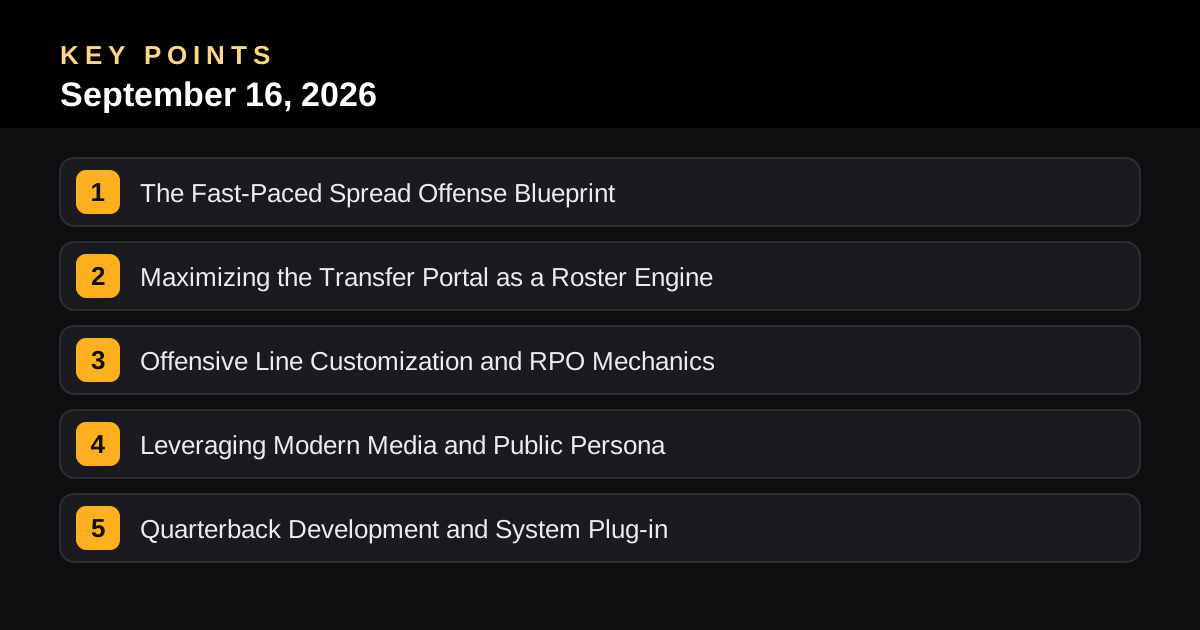
Offensive Line Customization and RPO Mechanics
An explosive spread offense cannot function without an offensive line tailored specifically to its blocking requirements. In traditional pro-style offenses, linemen are massive blockers tasked with maintaining deep, stationary pockets for drop-back quarterbacks. In the Kiffin system, the emphasis shifts toward agility, quick footwork, and coordinated movement. Linemen must be athletic enough to reach the second level of the defense quickly on running plays, while also executing disciplined pass sets that account for quick-release throws rather than extended blocking durations.
The integration of zone-blocking schemes is central to this offensive line philosophy. Rather than assigning every lineman to a specific defender, zone blocking asks the entire unit to move in unison toward a designated gap, sealing off running lanes regardless of how the defense shifts pre-snap. This creates cutback opportunities for the running back and simplifies the mental load for the linemen, allowing them to play faster and with greater confidence. When combined with RPO action, the offensive line often appears to be run-blocking while the quarterback is actually surveying the perimeter for a quick pass, exploiting aggressive defensive reactions.
Protecting the quarterback in this system relies heavily on rhythm and deception rather than raw physical dominance alone. By utilizing play-action passes, bootlegs, and quick screens, the offense keeps edge rushers guessing and prevents them from pinning their ears back to rush the passer. Even when opponents manage to pressure the backfield, the quick-hitting nature of the play design typically allows the quarterback to release the ball safely. This structural protection helps mitigate talent disparities against premier opponents, keeping the offense on schedule and minimizing negative-yardage plays.
Leveraging Modern Media and Public Persona
Beyond tactical mastery on the field, Kiffin has redefined how a modern head coach utilizes public persona and media platforms to build a brand and attract attention. In an era where attention is a scarce and valuable commodity, traditional stoic coaching behaviors are frequently overshadowed by dynamic, transparent digital engagement. Kiffin utilizes social media channels, interviews, and public appearances to display a self-aware, humorous, and approachable personality. This strategy resonates strongly with younger demographics, particularly high school prospects and college-aged players who consume sports content primarily through digital formats.
This digital presence is not merely for entertainment; it serves as a powerful recruiting tool and a mechanism for controlling the narrative surrounding the program. By leaning into viral moments and showing personality, Kiffin creates a distinct culture that stands out in a crowded landscape of uniform coaching archetypes. Recruits often cite authenticity and a fun locker room environment as major factors in their decision-making process. Furthermore, high visibility helps maintain booster enthusiasm, drives merchandise sales, and keeps the program in the national conversation year-round, regardless of the seasonal calendar.
Internally, this modern communication style translates to a transparent relationship with players. Coaches who embrace digital culture often find it easier to connect with modern athletes, understanding their communication preferences, lifestyle habits, and motivations. This cultural alignment fosters trust and loyalty, which are essential when managing a roster full of high-profile transfers and competitive personalities. By turning public perception into an asset, the coaching staff ensures that the program remains a prominent, attractive destination for elite talent across the country.
Quarterback Development and System Plug-in
The quarterback position serves as the engine of the entire offensive system, requiring a specific set of cognitive and athletic traits to operate efficiently. Kiffin’s approach to quarterback evaluation emphasizes rapid post-snap processing, accurate short-to-intermediate ball placement, and mobility over traditional pro-style arm strength alone. Because the offense relies heavily on quick reads and RPOs, a quarterback must be able to evaluate coverage shifts in fractions of a second and deliver the ball accurately to receivers in space.
System integration is streamlined through simplified terminology and repeated play concepts that appear differently to the defense through window-dressing and motion. Rather than forcing a young or newly transferred quarterback to memorize a massive playbook of distinct plays, the system utilizes core concepts taught from multiple formations. This accelerates the learning curve, allowing quarterbacks to play fast and instinctively. Coaches focus heavily on training quarterbacks to read specific leverage points on cornerbacks and safeties, turning complex defensive schemes into binary decision-making exercises.
The success of this quarterback model is evident in the repeated high statistical output of players across different programs under Kiffin's tutelage. Whether working with veteran journeymen, high-profile transfers, or developing freshmen, the system provides a supportive framework that elevates performance. By emphasizing high completion percentages, limiting turnovers through quick releases, and capitalizing on explosive play opportunities, the quarterback position becomes an accessible yet devastating weapon capable of dismantling elite defenses on any given Saturday.
Program Scaling and Resource Optimization
Running a competitive major college football program in the modern era requires sophisticated resource allocation and program scaling. Because traditional powerhouses often hold advantages in historical prestige and institutional wealth, emerging or mid-tier programs must find innovative ways to maximize every available asset. The Kiffin model demonstrates how efficiency, data analytics, and targeted investment can bridge the gap. Instead of spreading resources evenly across every facet of the operation, programs lean heavily into areas that directly impact winning: offensive innovation, talent acquisition, and player development.
Operational success in this framework relies on several key pillars:
- Prioritizing financial and structural support for the football operations and recruiting staff to manage the portal effectively.
- Utilizing advanced data analytics to evaluate fourth-down tendencies, red-zone efficiency, and player performance metrics.
- Streamlining the coaching hierarchy to empower specialized analysts and coordinators who can diagnose opponent tendencies quickly during game weeks.
- Maximizing facility investments toward player recovery, nutrition, and training efficiency rather than purely cosmetic upgrades.
This strategic focus ensures that a program operates with the agility of a startup rather than the bureaucratic sluggishness of a legacy institution. By concentrating capital and human resources where they yield the highest return on investment, coaching staffs can punch above their weight class. This operational efficiency is what allows programs without deep traditional roots to consistently challenge for conference championships and elite postseason berths in a rapidly changing college football landscape.
Cultural Adaptation and Staff Composition
Sustaining success in a high-pressure environment requires a carefully curated assistant coaching staff and a flexible, resilient locker room culture. Kiffin has consistently surrounded himself with a mix of veteran tacticians and hungry, ascending young coaches who bring fresh ideas to both sides of the ball. This blend of experience and innovation prevents offensive and defensive schemes from becoming stale, ensuring that the team continually adapts to evolving tactical trends across the sport.
Locker room culture under this model is built on adaptability and transparency rather than rigid authoritarianism. Because modern rosters feature a high volume of veteran transfers alongside incoming freshmen, team leaders must bridge diverse backgrounds and previous experiences. Coaches foster an environment where accountability is shared, and individual performance is rewarded through clear metrics. This player-centric culture helps minimize internal friction and builds the mental toughness needed to navigate grueling conference schedules and high-stakes games.
Maintaining this cultural balance requires constant communication and emotional intelligence from the head coach and his staff. Kiffin’s style often involves keeping the atmosphere loose during practice weeks while demanding intense focus during execution periods. This balance helps reduce player burnout and anxiety during critical games. By cultivating a positive, high-energy environment, the program attracts top-tier coaching talent and keeps players motivated, creating a sustainable foundation for long-term competitiveness.
Conclusion
The coaching methodology popularized by Lane Kiffin represents a complete reimagining of how modern college football programs are built and operated. By combining fast-paced spread offensive principles with aggressive utilization of the transfer portal, sophisticated data-driven resource allocation, and a digitally native public persona, this model provides a clear blueprint for success. As the sport continues to evolve through regulatory and economic shifts, the ability to adapt rapidly, innovate tactically, and engage players authentically will remain the ultimate competitive advantage for any ambitious program.