Exploring the Cosmos: Frequently Asked Questions About Space Answered
Humanity has gazed upward at the night sky for millennia, seeking to understand our place in the vast and silent expanse of the universe. Space represents the ultimate frontier, combining profound mystery with rigorous scientific inquiry. As space agencies and private aerospace companies push further into the cosmos in 2026, our ability to observe, explore, and comprehend the universe has reached unprecedented heights. Advanced telescopes peer deeper into the early universe, while robotic probes and crewed missions expand our presence beyond Earth, turning once-fictional concepts into tangible scientific reality.
Yet, despite these monumental technological strides, space remains an intimidating topic filled with complex terminology, counterintuitive physics, and seemingly endless questions. Whether people wonder how stars generate their light, what keeps planets tethered in their orbits, or how astronauts manage daily life in a weightless environment, the fundamental mechanics of the universe can sometimes feel baffling. This guide addresses the most frequently asked questions about space, breaking down complex astrophysical concepts into clear, understandable explanations that illuminate how the universe functions.

What Is the Boundary of Space and Where Does It Begin?
Determining where Earth ends and outer space begins is not as simple as drawing a physical line on the ground, because the atmosphere does not have a hard outer edge. Instead, the air simply thins out gradually as altitude increases, blending imperceptibly into the vacuum of interplanetary space. To establish a practical legal and scientific boundary, international aviation authorities settled on an imaginary line known as the Kármán line, which is located approximately one hundred kilometers above sea level.
The Kármán line is defined based on an aerodynamic principle involving flight dynamics and atmospheric density. At this altitude, the Earth's atmosphere is so thin that an aircraft would need to travel at orbital velocity—meaning extremely fast—to generate enough aerodynamic lift from its wings to stay aloft. Below this line, traditional flight is supported by air pressure; above it, aerodynamic flight becomes impossible, and spacecraft must rely entirely on orbital mechanics and rocket propulsion to maneuver.
While the Kármán line serves as the universally recognized threshold for space, the actual physical effects of Earth's upper atmosphere extend much further outward. Atmospheric gases can be detected hundreds of kilometers higher, creating a faint, glowing layer known as the exosphere before giving way to the true interplanetary vacuum. Consequently, satellites in low Earth orbit still experience slight atmospheric drag, requiring occasional course corrections and engine burns to maintain their altitude over time.
How Do Stars Form and Eventually Die?
Stars are the primary engines of the cosmos, responsible for forging heavy chemical elements and illuminating the darkness of space. The life cycle of a star begins deep within immense clouds of cold interstellar gas and dust known as nebulae. Over millions of years, gravitational forces cause pockets within these gas clouds to collapse inward under their own weight. As the material condenses and spins faster, the core temperature rises dramatically until nuclear fusion ignites, turning hydrogen into helium and officially birthing a new star.
The lifespan of any given star is fundamentally determined by its initial mass, which dictates how quickly it consumes its nuclear fuel supply. Massive stars burn through their hydrogen fuel at an astronomical rate, shining with intense blue-white light and exhausting their reserves in just a few million years. Conversely, smaller stars, such as red dwarfs, consume their fuel at a very conservative pace, allowing them to burn steadily for trillions of years, outliving almost every other stellar body in the universe.
When a star exhausts the nuclear fuel in its core, it enters its death phase, which varies dramatically depending on its size. Medium-sized stars like our Sun expand into red giants before shedding their outer layers to form glowing planetary nebulae, leaving behind a dense, cooling remnant called a white dwarf. Massive stars meet a far more violent end, collapsing suddenly and rebounding in a titanic explosion known as a supernova, which scatters essential elements across the galaxy and leaves behind either a hyper-dense neutron star or a black hole.
What Keeps Planets in Orbit Around Stars?
The eternal dance of planets revolving around stars is governed by a delicate balance between gravitational attraction and forward momentum. When a solar system forms, the spinning disk of gas and dust imparts a tremendous amount of angular momentum to the newly created planets. As these bodies travel forward through space, the powerful gravitational pull of the central star constantly tugs them inward, bending their straight-line path into a closed, looping orbit.
If a planet lacked forward motion, gravity would pull it directly into the star; conversely, if it moved too fast without enough gravitational pull, it would fly off into the freezing depths of interstellar space. The precise velocity required to maintain a stable orbit depends on the mass of the star and the distance between the two bodies. Planets generally follow elliptical paths rather than perfect circles, meaning their distance from the central star varies slightly as they complete each revolution over time.
Several primary factors influence the mechanics of planetary motion:
- Mass of the central star: Determines the strength of the gravitational field pulling inward.
- Orbital velocity: The forward speed of the planet keeping it from falling inward.
- Distance from the star: Governs the balance between gravitational pull and required speed.
- Planetary interactions: Subtle gravitational nudges from neighboring planets affecting orbital stability.
How Do Astronauts Live and Work in Microgravity?
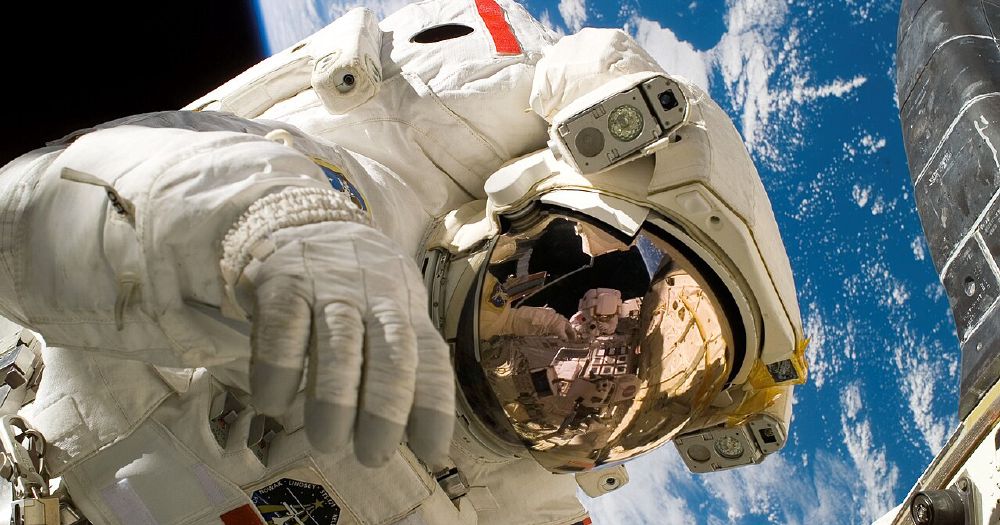
Living in space presents unique physiological and practical challenges due to the environment of microgravity found on orbiting stations. Microgravity is often misunderstood as a complete absence of gravity; in reality, astronauts aboard spacecraft are in a state of continuous free fall around the Earth. Because the spacecraft and its occupants fall toward the planet at the exact same rate, objects and people appear to float effortlessly within the cabin.
The human body evolved under the steady pull of Earth's gravity, and adapting to microgravity requires significant physiological adjustments. Without gravity pulling fluids down toward the lower body, astronauts frequently experience fluid shifts that cause puffy faces and nasal congestion. Additionally, prolonged exposure to weightlessness can lead to muscle atrophy and a decrease in bone density, which is why crew members must commit to rigorous daily exercise routines utilizing specialized resistance machines and stationary bicycles.
Daily life requires innovative solutions for routine terrestrial activities. Astronauts sleep in sleeping bags strapped securely to walls or inside small private crew quarters to prevent floating around and bumping into sensitive equipment. Meals consist of freeze-dried, dehydrated, or pre-packaged foods that must be rehydrated or warmed in specialized galleys. Water is an extremely precious resource on orbit, leading to advanced recycling systems that purify and reclaim virtually all moisture on the spacecraft, including sweat and condensation.
What Is Dark Matter and Dark Energy?
One of the greatest puzzles in modern astrophysics is that everything we can see, touch, and interact with—stars, planets, gas clouds, and living organisms—makes up only a tiny fraction of the universe. The vast majority of the cosmos consists of two mysterious components known as dark matter and dark energy. These phenomena are called dark because they do not emit, absorb, or reflect light, making them completely invisible to conventional telescopes and extremely difficult to study directly.
Dark matter acts as an invisible cosmic scaffolding that holds galaxies together against the forces that would otherwise tear them apart. When astronomers measure the rotation speeds of spiral galaxies, they find that the outer edges spin much faster than they should based on the visible mass of stars and gas alone. This discrepancy indicates that an enormous halo of unseen mass provides the extra gravitational glue needed to keep stellar systems intact, outweighing visible matter by a factor of five to one.
Dark energy, on the other hand, is an even more enigmatic force that drives the accelerated expansion of the entire universe. While gravity acts as an attractive force pulling matter together, dark energy behaves as a repulsive pressure on a cosmic scale, pushing distant galaxies away from one another at an increasingly rapid rate. Understanding the exact nature of dark matter and dark energy remains one of the premier objectives for contemporary physicists and astronomers worldwide.
How Do Telescopes Look Back in Time?
When people look at astronomical images of distant galaxies and nebulae, they are literally looking backward in time. This phenomenon occurs because light travels through the vacuum of space at a finite, measurable speed of approximately three hundred thousand kilometers per second. Although light moves remarkably fast by terrestrial standards, the distances across the cosmos are so immense that light requires significant time to bridge the gaps between celestial objects.
As an example, light from the Sun takes about eight minutes to reach Earth, meaning we always see our nearest star as it was eight minutes ago. When astronomers observe stars located thousands of light-years away—where a light-year is the distance light travels in one year—they are viewing those stars as they appeared centuries or millennia in the past. If a star located one thousand light-years away were to suddenly cease existing today, humanity would not know about the event until a thousand years had passed.
Advanced space telescopes leverage this principle to study the history of the universe itself, capturing photons that have been traveling across space for billions of years. By observing light across different wavelengths, including infrared, ultraviolet, and X-ray spectra, scientific instruments can pierce through cosmic dust clouds and detect the faint glow of the early universe. This allows researchers to reconstruct the evolutionary timeline of galaxies, charting their growth from primordial gas clouds to complex stellar systems.
Can Life Exist Elsewhere in the Universe?
The question of whether humanity is alone in the universe is perhaps the most profound inquiry in astrobiology. Scientists approach this question by searching for environments that possess the fundamental ingredients necessary for life as we know it: liquid water, an energy source, and essential chemical building blocks such as carbon, hydrogen, nitrogen, oxygen, phosphorus, and sulfur. While Earth remains the only confirmed oasis of life, the universe contains countless planetary environments that could potentially harbor biological organisms.
Within our own solar system, researchers focus heavily on worlds that show evidence of liquid water, either on their surfaces or hidden beneath thick crusts of ice. Mars once featured rivers, lakes, and a thick atmosphere, making ancient Martian environments promising targets for past microbial life. Meanwhile, outer solar system targets include icy moons orbiting gas giants, where tidal heating maintains vast subsurface oceans protected from harsh surface radiation and solar winds.
Beyond our solar system, the discovery of thousands of exoplanets has transformed the search for extraterrestrial life into a vibrant statistical science. Astronomers utilize space-based observatories to analyze the atmospheres of planets orbiting distant stars, searching for chemical imbalances known as biosignatures—such as simultaneous oxygen and methane—that might indicate biological activity. While definitive proof of alien life has not yet been found, the continuous improvement of observational technology keeps the scientific community optimistic about future discoveries.
How Are Space Missions Planned and Executed?
Designing, launching, and operating a successful space mission requires years of meticulous planning, engineering precision, and international collaboration. Spacecraft must endure extreme environmental conditions, ranging from the intense acoustic vibrations and G-forces of launch to the brutal thermal fluctuations and radiation exposure of the space environment. Before any hardware leaves the ground, engineers subject components to rigorous testing in vacuum chambers, vibration tables, and thermal simulators to ensure absolute reliability.
Once a mission is approved for flight, orbital mechanics dictate every aspect of its trajectory and timeline. Spacecraft rarely travel in a straight line from Earth to their destination; instead, engineers calculate precise launch windows and utilize gravity assist maneuvers. By flying close to planets like Venus, Earth, or Jupiter, a spacecraft can harness the gravitational pull of those bodies to gain velocity and change direction while conserving precious onboard fuel.
Managing active space missions requires continuous communication between the spacecraft and ground control teams on Earth. Telemetry data streamed back from orbit provides constant updates on spacecraft health, power generation, and thermal regulation. Autonomous flight software handles routine station-keeping and emergency responses, while human operators review science data and adjust operational parameters, ensuring that complex scientific objectives are met safely and efficiently.
Exploring space ultimately transforms our understanding of the universe and our own place within it. As science and technology continue to advance, the answers to these fundamental questions will keep evolving, sparking new inquiries and inspiring future generations of explorers. The cosmos remains an infinite expanse of discovery, waiting for curious minds to unlock its next great secret.