Developing Vocal Longevity: How Singers Improve Results Over Time
Singing is often perceived as an innate gift, but sustainable vocal excellence is fundamentally a product of deliberate practice, physiological conditioning, and ongoing technical refinement. Across months and years of consistent training, a singer's voice undergoes structural adaptations, developing greater resilience, wider tonal color, and enhanced dynamic control. Achieving better results over time requires moving away from short-term fixes and embracing a systematic approach to vocal health, anatomical awareness, and consistent skill acquisition. Building a reliable voice is an evolutionary process that rewards patience and dedication.
In the modern musical landscape of 2026, where artists navigate diverse recording environments, live performance demands, and digital distribution requirements, vocal reliability is more critical than ever. Whether you are performing indie folk, classical opera, or contemporary pop, the underlying principles of vocal mechanics remain constant. By understanding how the body produces sound and implementing structured routines, any vocalist can systematically elevate their craft and protect their instrument for decades of sustainable performance. Consistent self-assessment and disciplined habits form the foundation of this long-term artistic journey.

The Mechanics of Vocal Cord Health and Conditioning
The human voice relies on the larynx, specifically the vocal folds—delicate mucous membrane structures housed within the thyroid cartilage. When we sing, exhaled air passes through these folds, causing them to oscillate rapidly and produce sound waves. Because vocal folds vibrate hundreds or thousands of times per second depending on the pitch, they are susceptible to friction, fatigue, and injury if mismanaged. Conditioning this intricate instrument requires treating vocal hygiene not as an afterthought, but as an indispensable daily discipline that protects tissue integrity over a lifetime of use.
Hydration is the single most important factor in maintaining vocal fold elasticity and preventing cellular damage. Because the vocal folds lack their own blood supply for lubrication, they depend entirely on systemic hydration—drinking sufficient water throughout the day—and topical hydration from steam inhalation or saline nebulizers. Without adequate moisture, the friction between the folds increases drastically, leading to strain, hoarseness, and compensatory muscle tension in the neck, jaw, and shoulders. Over time, vocalists who prioritize hydration experience fewer instances of fatigue and recover much faster after demanding studio or live sessions, preventing chronic hoarseness.
Rest is equally vital for progressive development. Muscles and tissues need downtime to repair microscopic micro-tears resulting from intense practice and performance loads. Incorporating silent days or low-impact practice sessions allows the voice to synthesize technical gains without overloading the delicate tissue. By balancing rigorous conditioning with proper systemic recovery, singers build structural resilience that prevents chronic voice disorders and ensures long-term artistic growth and vocal longevity.
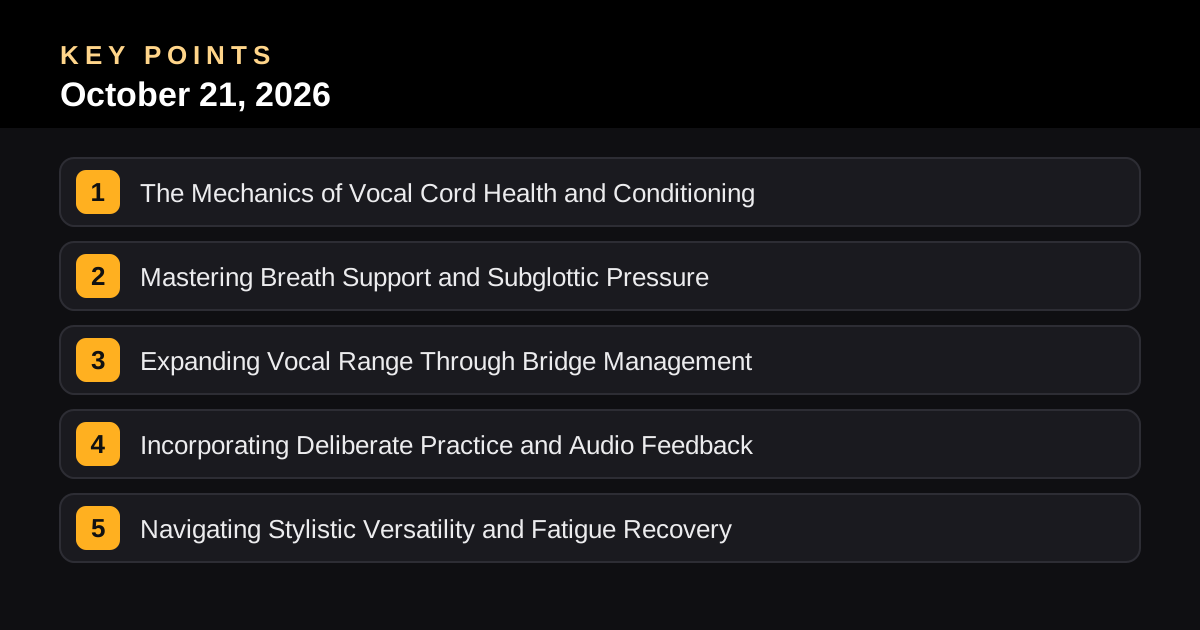
Mastering Breath Support and Subglottic Pressure
Breath support is the engine of the singing voice. It is frequently misunderstood as merely taking a deep breath into the chest; however, true support involves the coordinated management of subglottic pressure—the air pressure that builds up beneath the vocal folds. Effective breath support utilizes the diaphragm, intercostal muscles, and abdominal wall to regulate airflow smoothly. This allows the vocalist to sustain notes evenly without forcing excess air through the larynx, which can cause strain, pitch wobbles, and vocal instability.
When a singer learns to anchor their breath, the vocal cords can vibrate with maximum efficiency and minimum effort. This muscular coordination prevents the throat from tightening and shifts the physical workload away from the delicate muscles of the neck into the larger core muscle groups. As this neuromuscular pathway becomes deeply ingrained over years of practice, the singer gains effortless projection, a steady vibrato, and precise control over dynamic phrasing across different musical styles and acoustic spaces.
To build and refine this support mechanism over time, incorporate specific daily grounding exercises:
- Practice sustained sibilant fricatives like a steady s sound to monitor and stabilize abdominal engagement.
- Utilize panting exercises to wake up the lower intercostal muscles without tensing the upper chest.
- Perform counted exhalations while maintaining an expanded ribcage posture to build endurance under controlled air release.
Expanding Vocal Range Through Bridge Management
Every voice features distinct registers—primarily chest voice and head voice—which correspond to different modes of vocal fold closure and resonance placement. The transitional areas between these registers are known as the passaggio or vocal bridges. A common hurdle for developing singers is the abrupt break or crack that occurs when moving from chest resonance to head resonance. Improving results over time requires learning to navigate these bridges smoothly by modifying vowel shapes, adjusting larynx height, and fine-tuning vocal fold thickness and tension.
To achieve a seamless blend, singers utilize mix voice, a coordination that allows the chest quality to extend upward into higher pitches without the heavy pushing characteristic of pure chest voice, or the breathy thinness of unsupported head voice. This is accomplished through targeted vocalise drills, such as siren slides and open-vowel scales, which train the laryngeal tilt and cricothyroid muscles. Over months of consistent practice, the muscular adjustments required for register transitions become automatic, expanding the usable performance range and creating a uniform tone across all musical octaves.
Additionally, developing patience with register integration is essential. Pushing too hard through the bridge creates vocal strain and delays neuromuscular adaptation. By working gently within transitional zones and allowing the vocal folds to thin out naturally, singers foster long-term vocal freedom and reliable range expansion without risking injury or burnout.
Incorporating Deliberate Practice and Audio Feedback
Practicing without a clear strategy often leads to reinforcing bad habits rather than improving performance. Deliberate practice requires setting specific, micro-targeted objectives for every session—such as fixing an unstable vowel on a high note, smoothing out a specific run, or stabilizing pitch accuracy during dynamic shifts. Instead of singing through an entire song repeatedly, a developing vocalist isolates problem measures, analyzes the root cause of the difficulty, and drills the corrective movement slowly and mindfully until it becomes second nature.
An indispensable tool in this process is high-fidelity audio recording. Human hearing is notoriously unreliable when singing because bone conduction alters how our own voice sounds to us. Listening back to unedited recordings provides an objective mirror, revealing issues with intonation, tone quality, diction, and breath noise that might go unnoticed in the moment. Regularly reviewing these recordings helps singers build a stronger internal feedback loop and make precise technical adjustments over time for noticeable improvement.
To structure an effective deliberate practice routine, consider implementing these key steps:
- Record a short passage of a challenging piece without stopping to correct mistakes.
- Listen back critically, identifying one specific technical flaw, such as flat intonation or excessive nasal resonance.
- Isolate the underlying phrase and practice it at half tempo, focusing exclusively on correcting that single variable before attempting full speed again.
Navigating Stylistic Versatility and Fatigue Recovery
Modern vocalists are frequently expected to transition between multiple musical styles—ranging from the breathy intimacy of indie pop to the powerful belt of musical theatre or the microtonal nuances of contemporary R&B. Each style places distinct demands on the vocal folds and resonance tracts. For example, belting requires high subglottic pressure and high laryngeal positioning, whereas classical singing favors a lowered larynx and rich acoustic damping. Developing long-term versatility means learning how to shift acoustic strategies without compromising overall vocal health or timbre consistency.
Adapting to stylistic demands safely requires understanding the physical boundaries of your instrument. A singer who attempts a demanding contemporary style without building the requisite muscular endurance risks acute strain or long-term damage like nodules or hemorrhages. Therefore, stylistic expansion must happen incrementally, backed by a robust warm-up routine that prepares the vocal folds for specific acoustic adjustments, and a dedicated cool-down routine to gently return the larynx to a resting position after strenuous vocal exertion.
Recovery is not merely passive waiting; it involves active physiological management. Adequate sleep, balanced nutrition, and minimizing exposure to environmental irritants like smoke or dry air ensure that the vocal folds maintain optimal mucosal consistency. By treating vocal recovery as an active component of your training schedule, you protect your instrument against the cumulative fatigue that often interrupts artistic progress and vocal development.
Improving as a singer is a cumulative journey that unfolds over years rather than weeks. By prioritizing vocal health, mastering breath support, navigating register transitions with care, practicing with deliberate intention, and adapting safely to diverse styles, vocalists build a resilient and expressive instrument. True artistic longevity comes from patience, consistency, and a willingness to listen closely to your body and your recordings. Embrace the process of steady refinement, and your voice will continue to grow richer, more flexible, and more powerful over time.