A Practical Step-by-Step Guide to Evaluating Instacart Stock
Evaluating publicly traded technology companies requires a rigorous, structured approach that moves far beyond surface-level brand recognition. Instacart, operating under Maplebear Inc. with the ticker symbol CART, represents a complex intersection of retail e-commerce, digital logistics, and high-margin advertising technology. As the digital grocery delivery landscape matures through 2026, investors examining this stock must look closely at how the underlying business generates revenue, manages operational expenditures, and defends its distinct market share against well-capitalized competitors.
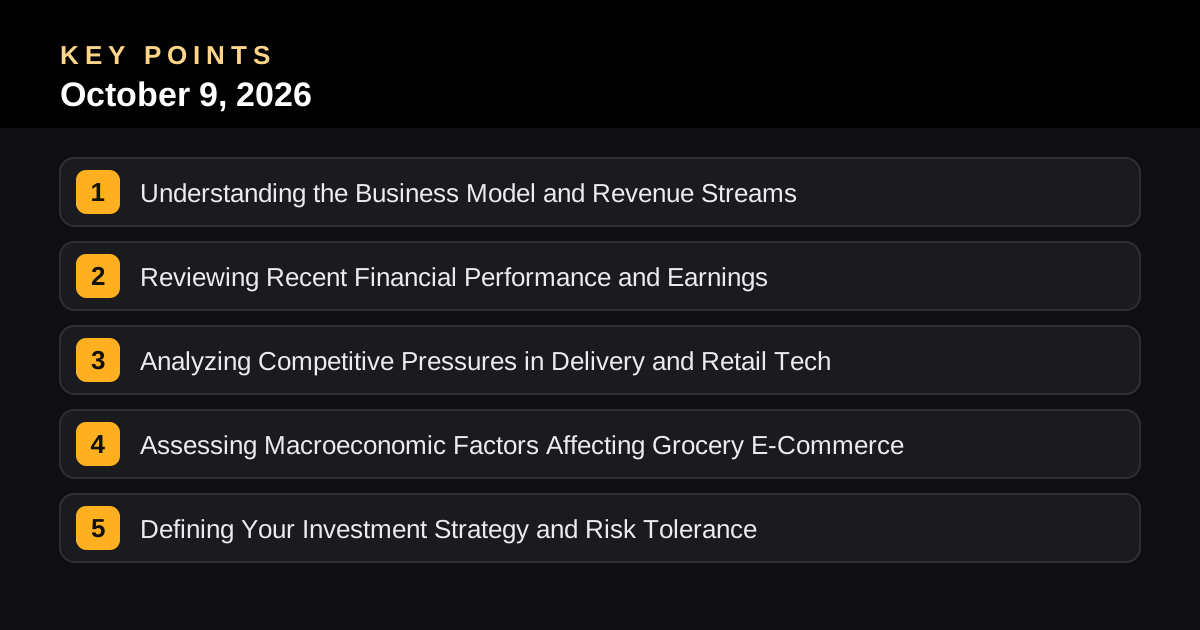
This article provides a practical, step-by-step walkthrough for analyzing Instacart stock from the ground up. By breaking down the evaluation process into discrete phases—ranging from business model examination to financial statement analysis, competitive benchmarking, and risk assessment—you can build a comprehensive framework for analytical decision-making. Whether conducting initial research or refining an existing portfolio strategy, adopting a systematic method helps filter out daily market noise and focuses your attention squarely on fundamental business drivers and long-term viability.

Understanding the Business Model and Revenue Streams
The first step in evaluating Instacart stock is thoroughly understanding how the underlying company makes money and sustains its operations. Unlike traditional supermarkets that rely strictly on product markups, Instacart operates primarily as a digital marketplace and technology provider. The company generates revenue through three core pillars: consumer delivery fees and transaction service charges, enterprise software solutions licensed to grocery retailers, and digital advertising placements. Recognizing the distinct contribution of each segment is essential because profit margins vary significantly across these divisions.
Transaction fees and delivery charges form the visible operational foundation of the consumer-facing platform, connecting shoppers with local supermarkets and specialty food stores. However, a substantial portion of Instacart's overall gross profit stems from its expanding advertising network. Consumer packaged goods brands pay directly for prominent digital shelf placement and targeted promotions within the app, transforming the storefront into a high-margin advertising medium. Additionally, the enterprise software division licenses fulfillment and e-commerce technology directly to grocers, creating recurring business-to-business revenue streams that help insulate the firm from delivery volume fluctuations.
Understanding these separate revenue streams allows you to evaluate where growth is accelerating and where margin expansion is most likely to occur. While delivery volumes might experience seasonal plateaus, advertising and enterprise software revenues often demonstrate higher stability and stronger gross margins, directly influencing the company's financial health and valuation multiples.
Reviewing Recent Financial Performance and Earnings
Once you understand the revenue model, the next step involves analyzing financial reports with a critical eye. Publicly traded companies file periodic quarterly and annual reports that provide detailed disclosures regarding revenue growth, cost structures, profitability, and cash flow generation. When reviewing Instacart's financial statements, look far beyond headline revenue numbers to examine Gross Transaction Value, which measures the total dollar value of all merchandise sold through the platform. Consistent growth in GTV indicates whether consumer demand for digital grocery shopping is expanding across demographics.
Profitability metrics require careful scrutiny, particularly regarding adjusted earnings before interest, taxes, depreciation, and amortization, alongside operating cash flow generation. Because the third-party grocery delivery sector historically struggled with thin operational margins and high customer acquisition costs, tracking how effectively management controls fulfillment labor expenses is critical. Reviewing consecutive quarterly reports helps identify trends in operating leverage—the metric showing the degree to which revenue growth outpaces operational cost increases—signalling whether the business model is scaling efficiently toward sustained profitability.
Additionally, examine balance sheet strength, including cash reserves and debt levels, to assess financial flexibility. A robust balance sheet provides a crucial buffer against economic downturns and affords management capital necessary to invest in technological innovations or share repurchase programs. Comparing these figures against previous fiscal years establishes a clear trajectory of financial health.
Analyzing Competitive Pressures in Delivery and Retail Tech
No company operates in a vacuum, making comprehensive competitive analysis a vital component of your research workflow. Instacart competes across multiple distinct fronts, facing pressure from broad food delivery aggregators, quick-commerce startups, and proprietary e-commerce apps of major supermarket chains. Furthermore, retail media networks launched by traditional grocery giants create direct competition for lucrative advertising dollars. To evaluate how well Instacart can sustain its competitive advantage over time, consider the following structural factors:
- Network effects connecting a massive base of active shoppers with extensive retail partnerships across national and regional chains.
- Proprietary logistics, batching algorithms, and routing software that optimize driver efficiency and fulfillment speed.
- Deep technological integration with grocers through white-label websites, mobile applications, and in-store digital pickup tools.
Assessing these competitive dynamics helps determine whether the company possesses a durable economic moat. If major supermarket chains decide to exclusively build internal delivery systems without third-party platforms, Instacart's addressable market could face constraints. Conversely, if grocers find that partnering with Instacart is more cost-effective than developing proprietary infrastructure, platform retention remains strong. Monitoring partnership announcements, merchant retention rates, and average order values provides concrete data on these evolving business relationships.
Evaluating competitor strategies also involves observing how quickly rival platforms adopt new retail technologies, such as automated warehouse picking or artificial intelligence-driven personalization. Companies that continuously innovate tend to retain consumer loyalty and merchant partnerships more effectively, shielding market share from new entrants.
Assessing Macroeconomic Factors Affecting Grocery E-Commerce
Macroeconomic conditions exert a profound influence on discretionary spending habits and consumer behavior, directly impacting grocery e-commerce adoption rates. Inflationary pressures on food prices influence average basket sizes and online order frequency, as consumers weigh delivery convenience against service fees and tips. During periods of economic tightening, households may reduce non-essential add-ons or shift back to traditional physical store visits to save on delivery fees, altering volume patterns across the platform.
Labor market dynamics also play a central role in shaping operational expenses and fulfillment feasibility. Because delivery shoppers operate as independent contractors or fulfillment workers, changes in minimum wage laws, labor regulations, and fuel prices directly impact driver supply and compensation costs. Evaluating how management navigates these macroeconomic variables reveals operational flexibility and adaptability. Companies that successfully pass on costs or leverage automation to improve efficiency are better positioned to weather economic cycles.
Furthermore, interest rate environments influence investor valuations for growth equities. When borrowing costs are higher, the market places greater emphasis on immediate free cash flow generation rather than speculative long-term expansion, changing how stock prices react to earnings reports.
Defining Your Investment Strategy and Risk Tolerance
Before taking any action regarding individual equities, defining your personal investment strategy and risk tolerance is paramount. Growth-oriented technology stocks often experience higher price volatility compared to defensive consumer staple stocks, reflecting market expectations for future expansion. Because Instacart operates at the intersection of technology and retail, its stock price can fluctuate based on broader technology sector sentiment, quarterly delivery volume surprises, or regulatory changes affecting gig-economy labor laws.
Establish clear parameters for how a potential position in CART fits into your broader portfolio allocation strategy. Diversification helps mitigate single-stock risk, ensuring that a downturn in one specific sector does not jeopardize your entire financial plan. Determine whether you are looking for short-term trading opportunities or long-term capital appreciation, as each approach demands entirely different monitoring frequencies, exit strategies, and valuation benchmarks.
Taking time to write down your investment thesis and specific entry or exit criteria before committing capital helps maintain discipline during market volatility. A well-defined strategy ensures financial choices remain aligned with personal goals rather than emotional impulses.
Setting Up Research and Monitoring Workflows
Maintaining an informed perspective requires setting up a structured monitoring workflow rather than reacting impulsively to daily stock price fluctuations. Establishing a routine schedule for reviewing financial disclosures, industry news reports, and macroeconomic data ensures your decisions remain grounded in objective analysis. Consider incorporating these key tasks into your ongoing review process:
- Tracking quarterly earnings release dates and reviewing management conference call transcripts for strategic updates.
- Monitoring retail partnership renewals, contract expansions, or new enterprise software client acquisitions.
- Keeping abreast of regulatory updates concerning independent contractor classifications, tax policies, and consumer data privacy laws.
By automating news alerts for specific company filings and industry research reports, you save time while staying informed about material developments. A disciplined workflow prevents emotional decision-making driven by sudden market headlines, encouraging a measured approach to long-term portfolio management.
Consistent monitoring also allows you to spot early indicators of fundamental shifts in the business, whether positive or negative. By observing trends across multiple consecutive reporting periods, you gain a clearer understanding of management execution and strategic progress.
Executing Trades and Managing Portfolio Position
When you are ready to execute trades, understanding order mechanics protects you from unnecessary execution costs and slippage. Utilizing limit orders rather than market orders gives you precise control over purchase or sale prices, particularly during periods of high intraday stock market volatility. Furthermore, consider implementing a phased entry strategy, such as dollar-cost averaging, which involves dividing your intended total investment across multiple smaller purchases over time to reduce timing risk.
Once a position is established, ongoing portfolio management involves periodic rebalancing to maintain your target asset allocation. If the stock appreciates significantly and represents an uncomfortably large percentage of your portfolio, disciplined rebalancing involves trimming the position to lock in gains or realign with your risk profile. Conversely, if business fundamentals deteriorate unexpectedly, having predefined criteria for exiting ensures that emotional attachment does not override objective reality.
Regular portfolio reviews ensure that your holdings continue to serve overarching financial objectives. By maintaining a structured, methodical approach to execution and ongoing portfolio oversight, you minimize common behavioral pitfalls and foster sustainable, disciplined investing habits.
Conclusion
Approaching Instacart stock requires a balanced, analytical perspective that weighs the company's digital advertising strength and enterprise software potential against competitive and macroeconomic risks. By following a step-by-step walkthrough—from understanding revenue streams and financial reports to defining risk tolerance and setting up research workflows—you can evaluate the equity with clarity and discipline. Systematic analysis transforms complex financial data into actionable insights, empowering you to make informed decisions aligned with your long-term financial objectives.
As the retail technology landscape continues to evolve, maintaining patience, discipline, and a commitment to ongoing education remains your greatest asset. Whether analyzing a single equity or managing a diverse multi-asset portfolio, adhering to a structured methodology ensures your financial journey is guided by objective principles rather than temporary market sentiment.